header-logo header-logo

How ‘Honourable’ are High Court judges?

26 July 2018 / Professor Graham Zellick CBE KC
Issue: 7803 / Categories: Features , Profession
printer mail-detail
nlj_7803_zellick

Professor Graham Zellick QC unravels the mysteries of parallel, non-optional & post-retirement titles

  • May High Court judges attach the prefix ‘The Honourable’ to their non-judicial title?
  • May retired High Court judges use the prefix ‘The Honourable’?
  • Should any of the current rules be changed?

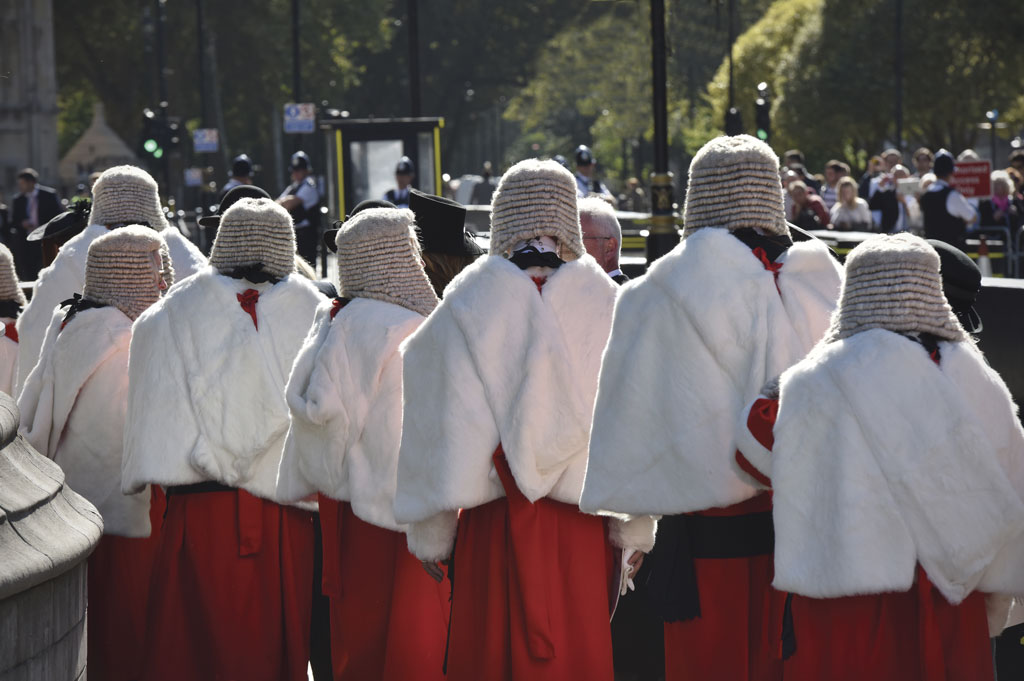
Puisne judges of the High Court—all justices of the High Court other than the heads of division—have the official title or style of ‘The Honourable Mr/Mrs/Ms Justice Smith’, with forename included only if there is already a judge with that or a similar surname so as to avoid confusion. Although no one seems to know the origin of or authority for this style of address, it is long-established, universally recognised and not disputed.

Also, High Court judges are knighted on appointment or, if a woman, appointed Dame Commander of the Order of the British Empire (DBE). Men are made Knights Bachelor, but as there is no direct female equivalent, women become DBEs. (The male equivalent of DBE is KBE (Knight Commander), but

If you are not a subscriber, subscribe now to read this content
If you are already a subscriber sign in
...or Register for two weeks' free access to subscriber content

MOVERS & SHAKERS

NLJ Career Profile: Ben Daniels, DAC Beachcroft

NLJ Career Profile: Ben Daniels, DAC Beachcroft

Ben Daniels, newly elected as the next senior partner of DAC Beachcroft, reflects on his leadership inspiration and considers an impish alternative career

Osbornes Law—Lee Henderson

Osbornes Law—Lee Henderson

Family team bolstered by latest partner hire

Freeths—Graeme Danby & John Jeffreys

Freeths—Graeme Danby & John Jeffreys

Firms strengthens national restructuring and insolvency practice with leadership appointments

NEWS
In Ward v Rai, the High Court reaffirmed that imprecise points of dispute can and will be struck out. Writing in NLJ this week, Amy Dunkley of Bolt Burdon Kemp reports on the decision and its implications for practitioners
Could the Supreme Court’s ruling in R v Hayes; R v Palombo unintentionally unsettle future complex fraud trials? Maia Cohen-Lask of Corker Binning explores the question in NLJ this week
In NLJ this week, Ian Smith, emeritus professor at UEA, explores major developments in employment law from the Supreme Court and appellate courts
Writing in NLJ this week, Kamran Rehman and Harriet Campbell of Penningtons Manches Cooper examine Operafund Eco-Invest SICAV plc v Spain, where the Commercial Court held that ICSID and Energy Charter Treaty awards cannot be assigned
Professor Dominic Regan of City Law School highlights a turbulent end to 2025 in the civil courts, from the looming appeal in Mazur to judicial frustration with ever-expanding bundles, in his final NLJ 'The insider' column of the year
back-to-top-scroll